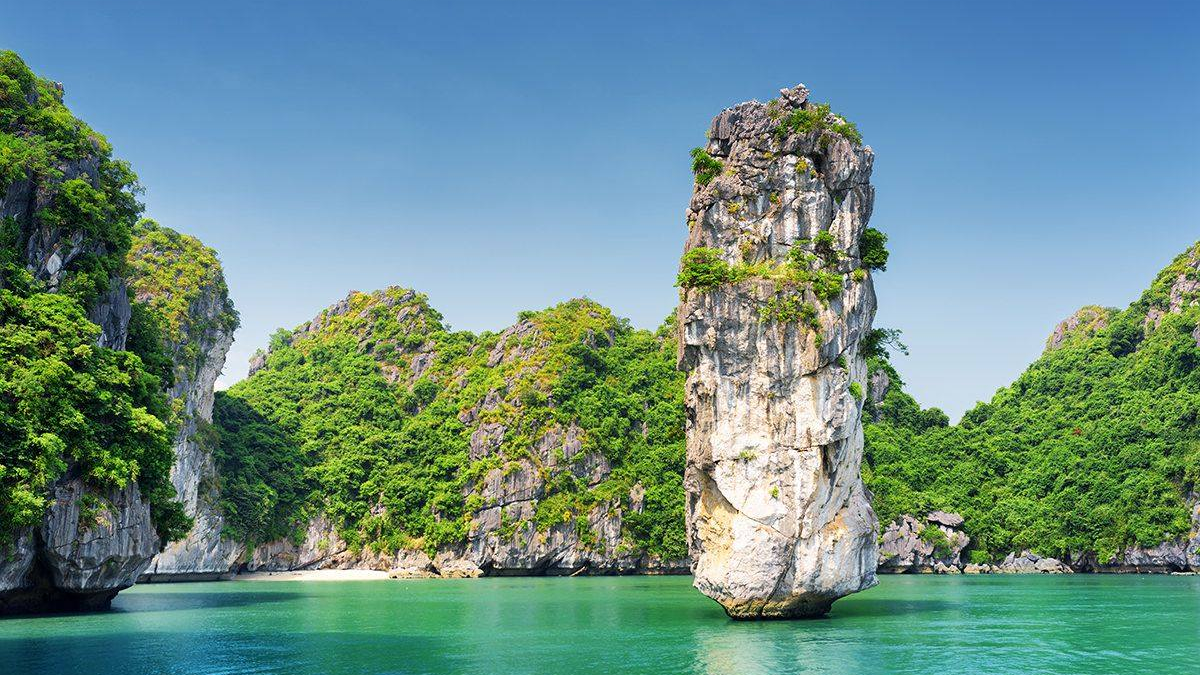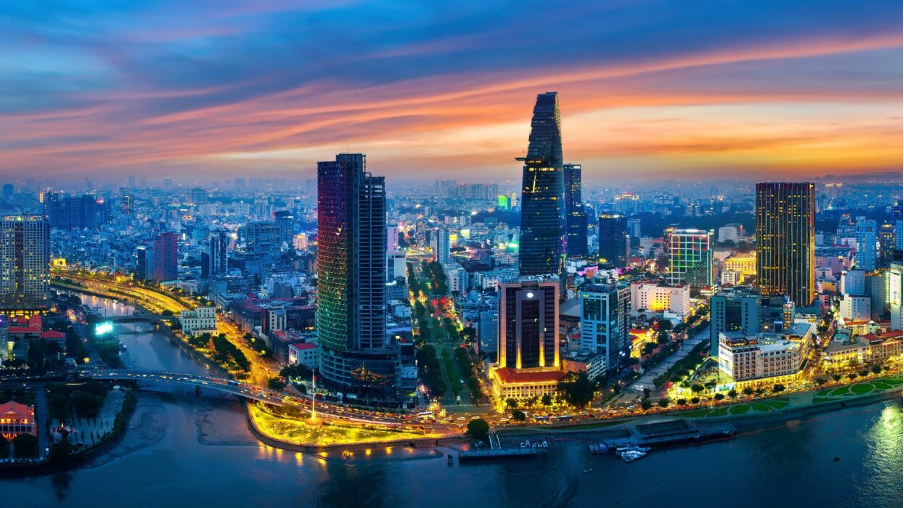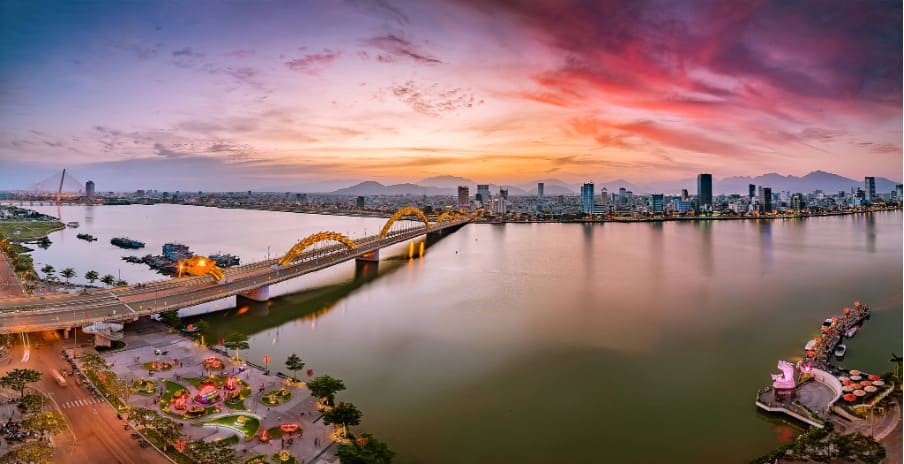
The best time to visit Vietnam varies by region, as the country’s weather changes significantly from north to south. Whether you’re planning to explore Hanoi, cruise Ha Long Bay, relax on Da Nang’s beaches, or discover Ho Chi Minh City, this guide covers the climate, travel seasons, and top experiences to help you choose the perfect time to visit.
Northern Vietnam: Four Seasons and Cultural Depth
The north is the only part of Vietnam with four distinct seasons and the region most travelers associate with the country’s traditional culture. It rewards visitors who time their trip around its short but stunning autumn window.

Geographic Overview
Northern Vietnam covers Hanoi, Halong Bay, Sapa, Ninh Binh, and Ha Giang. The terrain shifts dramatically from the flat Red River Delta around Hanoi to the karst limestone formations of Halong Bay and the mountain ranges bordering China.

Elevation matters here: Sapa sits at 1,500 meters above sea level, which explains why it experiences occasional snow while Hanoi rarely drops below 15 degrees Celsius.
Cultural and Traditions
Northern Vietnam is widely regarded as the cultural heart of the country, where centuries-old traditions, performing arts, and diverse ethnic communities continue to thrive.
- Cradle of Vietnamese culture: Hanoi has served as the country’s capital for over a thousand years and preserves traditions distinct from the south.
- Traditional arts: Water puppet performances originated in the Red River Delta, and ca tru chamber music (UNESCO-recognized) still thrives in small Hanoi venues.
- Ethnic minority communities: The Hmong, Dao, and Tay peoples in Sapa and Ha Giang maintain distinct languages, textiles, and market traditions.

Weather and Best Time to Visit
The region’s climate changes noticeably throughout the year, with each season offering different landscapes, weather conditions, and travel experiences:
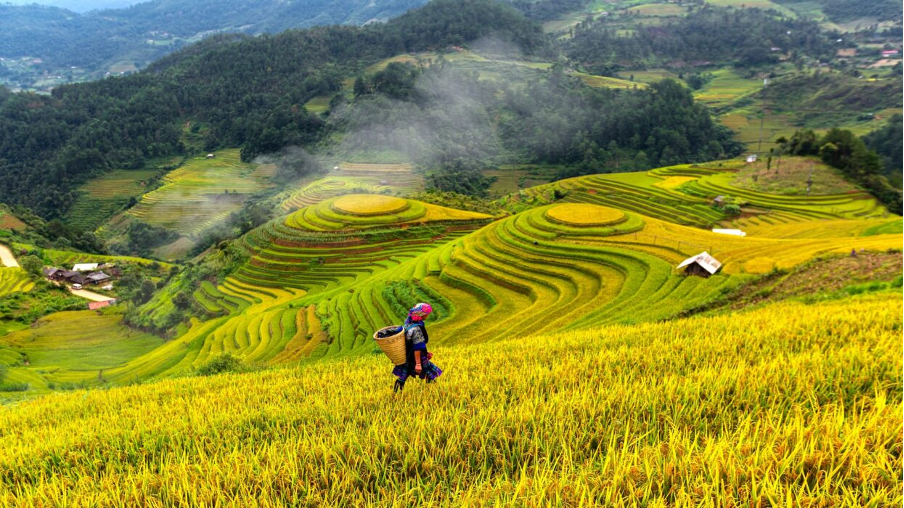
- Golden window (October to December): Clear skies, low humidity, and temperatures around 20 to 25 degrees Celsius. Sapa’s rice terraces turn golden in late September through early October.
- Cold season (January to March): Chilly with occasional drizzle called mua phun. Atmospheric but requires warm clothing, especially in the mountains.
- Avoid summer (June to August): Extreme humidity, afternoon thunderstorms, and the risk of Halong Bay cruise cancellations.
Central Vietnam: Heritage Coast and Short Weather Windows
Central Vietnam has the trickiest weather to plan around because its rainy season is short but severe. Time it right and the region delivers Vietnam’s richest heritage sites paired with some of Southeast Asia’s best beaches.
Geographic Overview
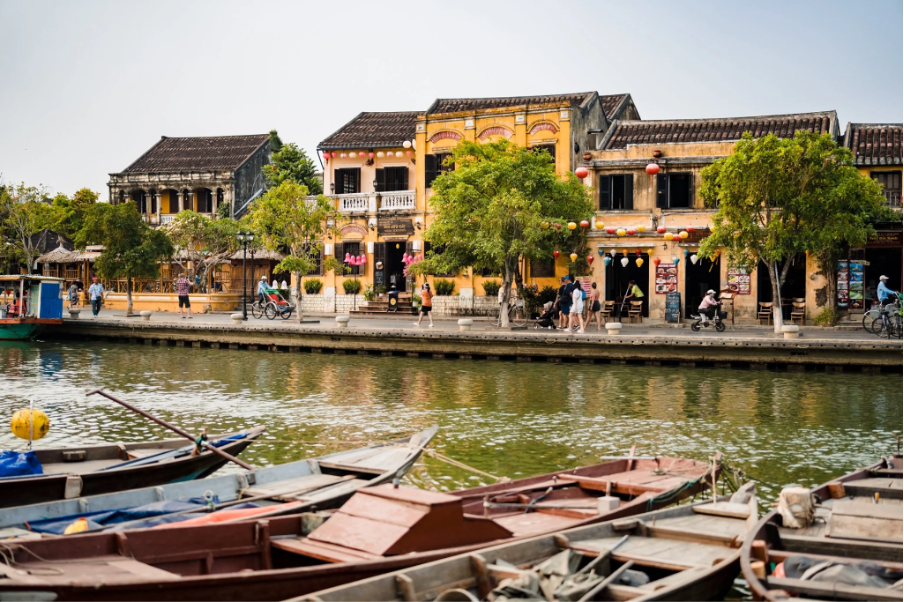
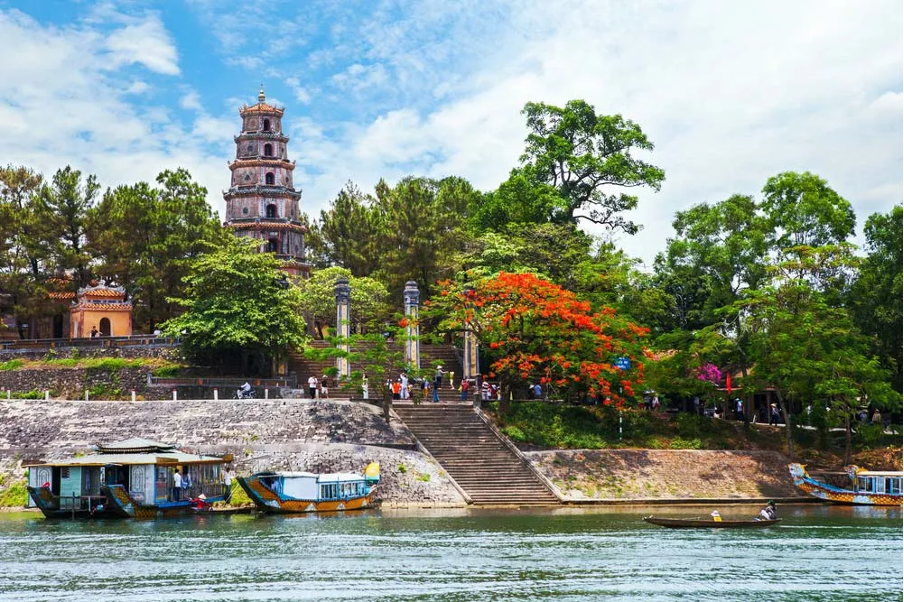
Central Vietnam runs along a narrow coastal strip that includes Hue, Da Nang, Hoi An, and Nha Trang, with Da Lat sitting inland at 1,500 meters in the Central Highlands. The Truong Son mountain range forms the western border, and beaches line the entire eastern edge.
Distances are compact: Hue to Hoi An is about 130 kilometers, and Da Nang to Hoi An is only 30 kilometers.

Culture and Traditions
From imperial traditions in Hue to the multicultural heritage of Hoi An and the ancient Cham Kingdom, Central Vietnam offers a fascinating journey through the country’s cultural history:
- Imperial heritage: Hue served as the capital of the Nguyen Dynasty from 1802 to 1945, leaving royal cuisine, court music, and palace architecture that remain distinct from the rest of the country.
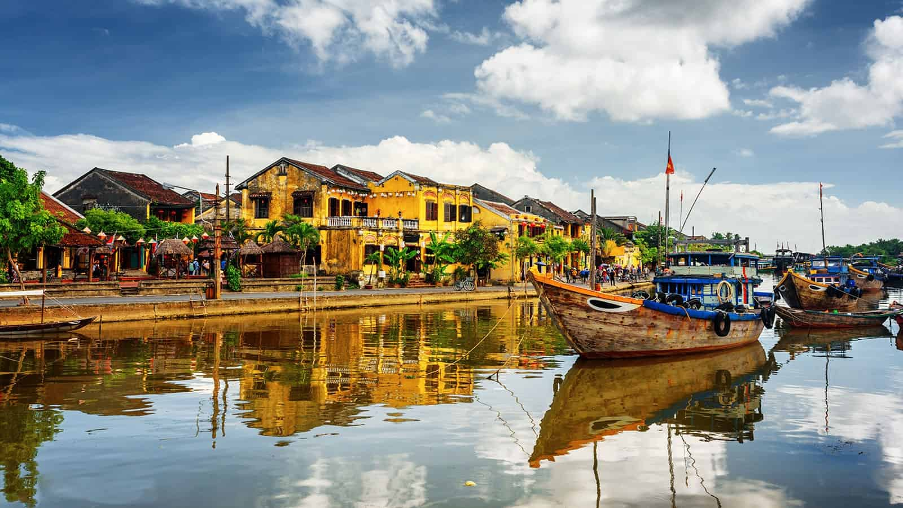
- Trade town legacy: Hoi An’s culture reflects centuries of Japanese, Chinese, Dutch, and Indian trade, visible in the architecture and signature dishes.
- Cham civilization: Ruled central Vietnam for over a thousand years and left temples across the region. My Son Sanctuary and the Cham Museum in Da Nang are the best places to encounter this heritage.
Weather and Best Time to Visit
The region experiences warm weather throughout the year, but seasonal changes can significantly affect outdoor activities, beach holidays, and sightseeing:
- Golden window (February to May): Warm temperatures around 24 to 30 degrees Celsius, low humidity, and reliably sunny skies.
- Beach season (June to August): Intense heat above 35 degrees Celsius but stays dry, ideal for travelers who can handle high temperatures.
- Avoid September to November: Typhoons regularly make landfall and Hoi An is prone to serious flooding.
Southern Vietnam: Warm All Year with Two Simple Seasons
The south operates on the simplest calendar in Vietnam: wet or dry, with temperatures staying warm across every month. Understanding those two seasons matters more than picking a specific week.
Geographic Overview
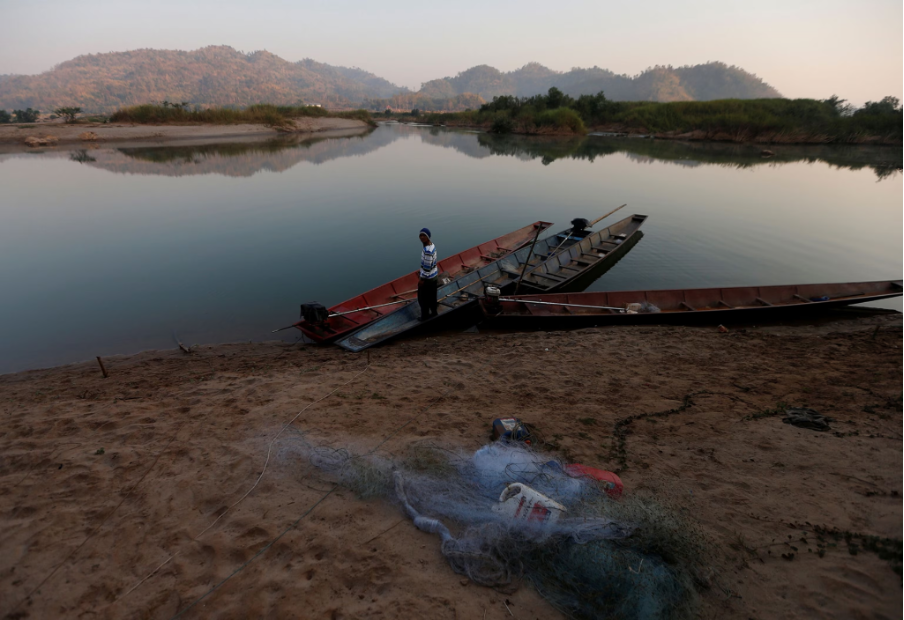
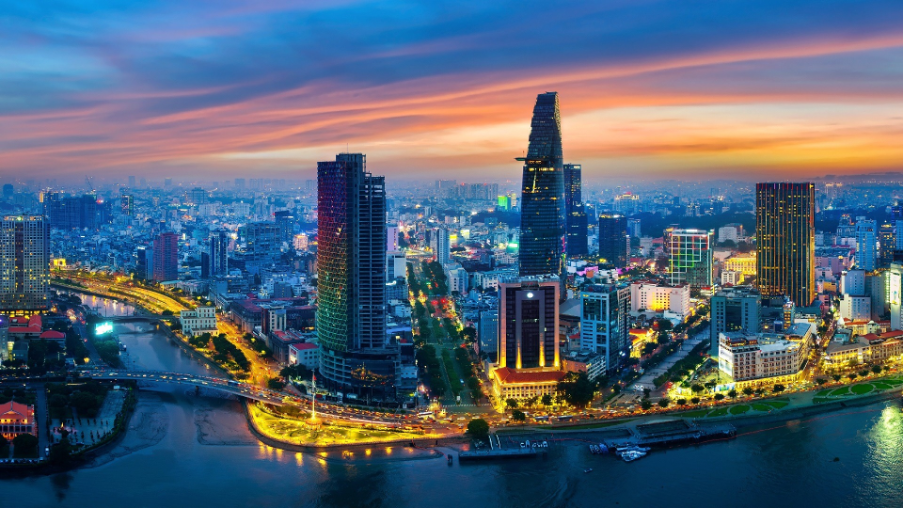
Southern Vietnam includes Ho Chi Minh City, the Mekong Delta, Phu Quoc, Mui Ne, and Vung Tau. The region sits in the tropics, with flat terrain dominated by the Mekong River’s vast delta and long stretches of coastline. Phu Quoc, Vietnam’s largest island, lies in the Gulf of Thailand and enjoys the country’s clearest waters.
Culture and Traditions
Southern Vietnam offers a fascinating combination of multicultural heritage, thriving cities, spiritual landmarks, and the distinctive river culture of the Mekong Delta.
- Cosmopolitan mix: Shaped by centuries of trade with Chinese, Khmer, and Cham communities, then later by French colonial and American influences.
- Economic capital: Ho Chi Minh City combines modern skyscrapers with colonial landmarks and traditional markets.
- Rural southern life: The Mekong Delta preserves floating markets, coconut candy workshops, and rice paddies stretching to the horizon.
- Spiritual sites: Buddhist and Cao Dai temples define the region, with Cao Dai’s headquarters in Tay Ninh being one of the most visually striking religious sites in the country.

Weather and Best Time to Visit
Unlike Northern Vietnam, Southern Vietnam has a consistently warm climate throughout the year, with seasonal rainfall being the main factor to consider when planning your trip.
- Sweet spot (November to February): Warm days around 27 to 30 degrees Celsius, low humidity, and almost no rain.
- Hot dry season (March to April): The hottest months of the year at 35 to 37 degrees Celsius, but stays dry.
- Rainy season (May to October): Scares off many travelers unnecessarily. Most days involve a heavy but short afternoon downpour rather than all-day rain.
- Phu Quoc exception: Rough seas from July to September close some beaches on the island.

Transportation Options For Travellers In Vietnam
Vietnam’s geography means most trips involve traveling through very different environments. Visitors can experience the humid streets of Hanoi, the peaceful coastline of Da Nang, and the tropical energy of Ho Chi Minh City, with each destination offering a distinct travel experience. The best option depends on your destination, budget, and travel style.
Ride-Hailing Apps
Ride-hailing apps are digital platforms that connect passengers directly with drivers through a smartphone application. Travelers simply enter their pickup and drop-off locations, review the estimated fare shown upfront, and confirm the booking. Nearby drivers receive the request automatically, and passengers can track the vehicle’s arrival in real time, with payments supported by cash, card, or e-wallet.
Green SM (Xanh SM) offers a modern alternative with a fully electric fleet and a nationwide network. Instead of serving just one city or region, the platform provides a consistent booking experience across many destinations in Vietnam.

To help travelers get around more conveniently, Green SM offers a full ecosystem of electric transportation covering all three regions. Every ride runs on 100% electric vehicles with professional drivers and transparent fares shown before booking. This makes traveling between attractions comfortable, reliable, and environmentally friendly.
Services available across the country:
- Green Bike: Solo travelers navigating narrow Old Quarter streets in Hanoi or Hoi An.
- Green Car: Couples and small groups moving between hotels, restaurants, and attractions within a city.
- Green Premium: Higher-end vehicles for a more comfortable ride.
- Green Limo: Families or groups needing extra space, particularly useful with airport luggage.
- Green Liên tỉnh: Intercity routes without the hassle of shuttle transfers or bus stations.
- Green Airport: Pickups and drop-offs at Noi Bai, Da Nang, Tan Son Nhat International Airports and more.
More information: Detailed information about Green SM service.
How to check Green SM availability on your trip
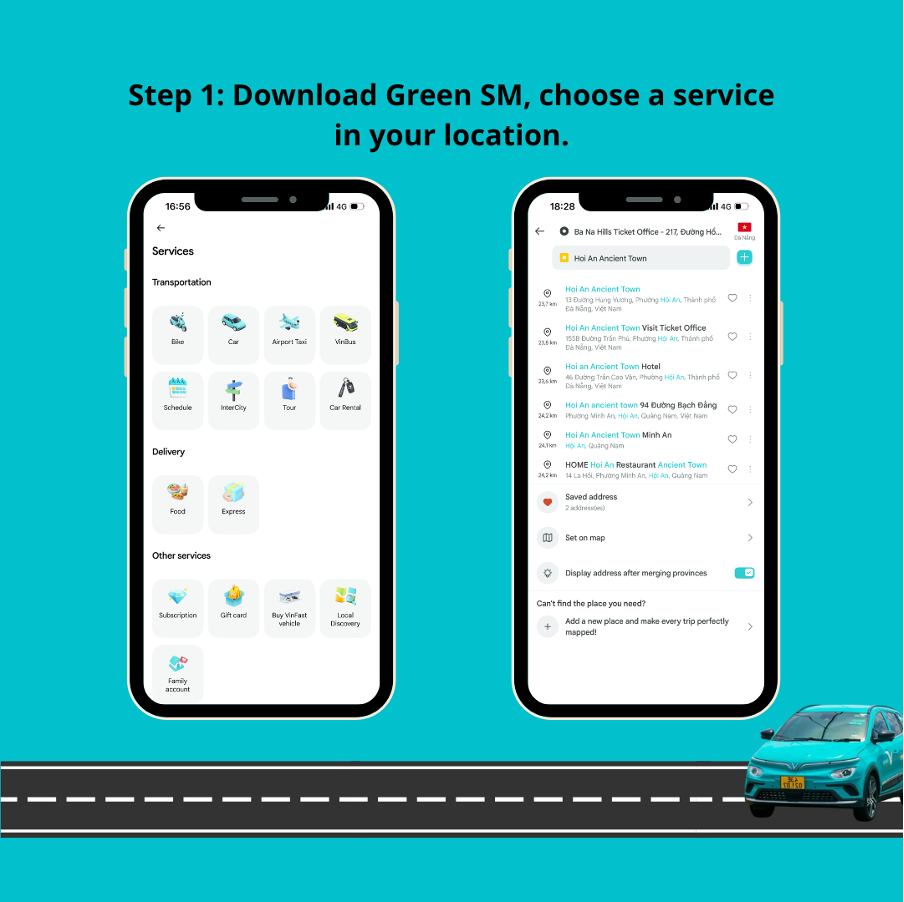
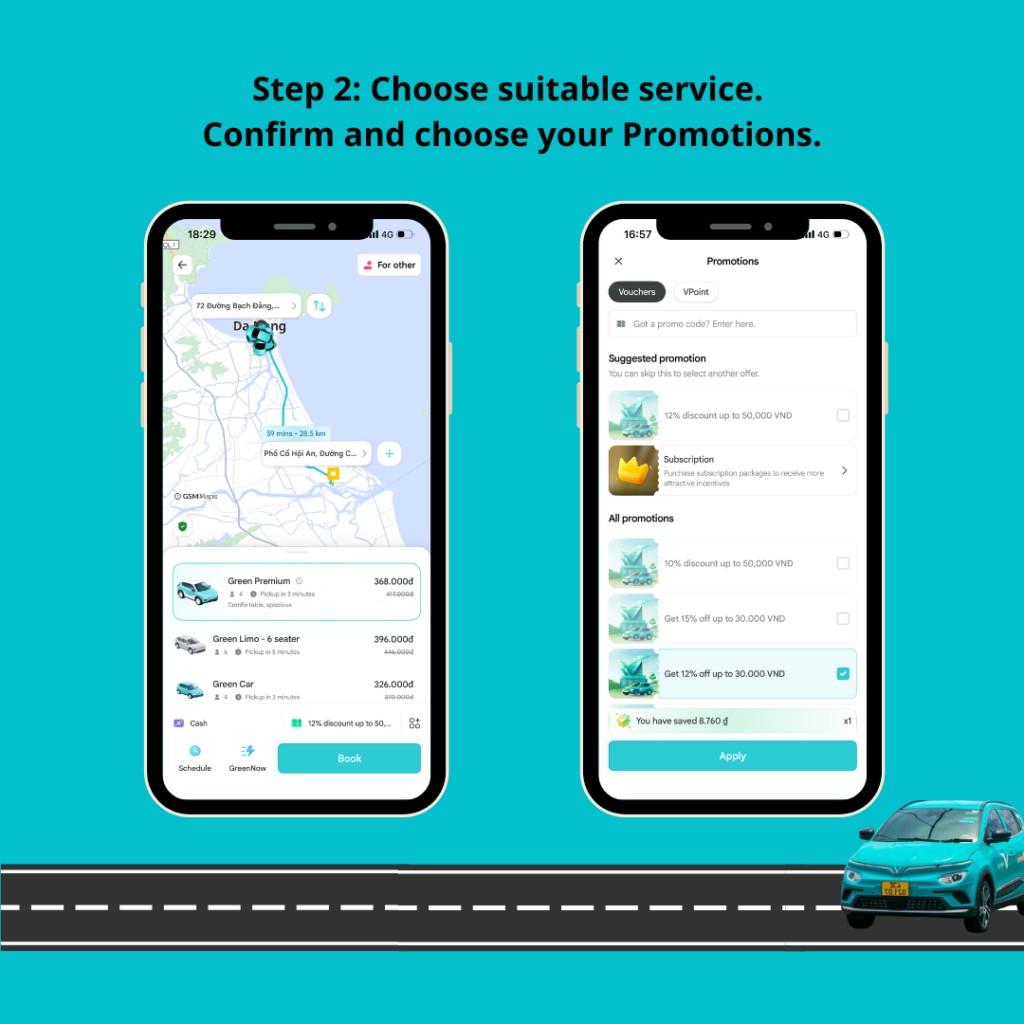
Finding out whether Green SM operates in your destination takes just a few moments. Follow these two simple steps:
Step 1. Download the Green SM app from the App Store or Google Play. Enter your location then select one of the services as an example.
Step 2. The display shows every available Green SM services. Choose the suitable service, review the fare estimate, confirm your booking, and track your driver’s arrival in real time.
More information: Download the Green SM app on the App Store or Google Play.
Taxi
Taxis are one of the most convenient ways to get around Vietnam, especially for travelers with luggage, visiting multiple attractions in a day, or arriving at an airport. Most major taxi providers offer mobile apps for booking rides, viewing fare estimates, and paying cashlessly. Popular operators across the country include Mai Linh, Vinasun, and G7 Taxi.
Note: Fares, contact numbers, and service availability are provided as a general guide and may vary by operator, location, and time of booking. Please check the latest information directly with your chosen provider before traveling to avoid unexpected changes.
Mai Linh Taxi
- Contact: 1055
- Key features: One of Vietnam’s oldest and most recognizable taxi brands (founded 1993), with distinctive green vehicles operating across dozens of provinces. Offers both metered service and its own mobile app, making it a reliable choice for airport pickups and cross-country travel.
Vinasun Taxi
- Contact: 028 38 27 27 27
- Key features: A leading taxi operator in southern Vietnam (established 2003) known for reliable metered service and an extensive fleet. Primary coverage in Ho Chi Minh City and neighboring southern provinces, with a dedicated mobile app for booking and fare estimates.
G7 Taxi
- Contact: 024 32 32 32 32
- Key features: Launched in 2018 through the merger of three leading Hanoi taxi operators (Thành Công, Ba Sao, and Sao Hà Nội). One of the capital’s largest taxi networks with app-based booking and extensive coverage across Hanoi and Noi Bai International Airport.
Metro
Metro systems are the fastest way to avoid rush-hour traffic in Vietnam’s largest cities. Both Hanoi and Ho Chi Minh City currently operate metro lines with bilingual Vietnamese-English signage, making them easy for international visitors to navigate.
Popular lines for travelers include Hanoi’s Line 2A and Line 3, and Ho Chi Minh City’s Line 1.
Note: Fares, contact numbers, and service availability are provided as a general guide and may vary by operator, location, and time of booking. Please check the latest information directly with your chosen provider before traveling to avoid unexpected changes.
Hanoi Metro (Line 2A and Line 3)
- Contact: 1900 3648
- Key features: Cat Linh – Yen Nghia Line (2A) and Nhon – Hanoi Railway Station Line (Line 3, partial operation) connect key stations such as Cat Linh, Thai Ha, Ha Dong, Cau Giay, and Nhon.
- Pricing: 9,000 – 19,000 VND.
Ho Chi Minh City Metro (Line 1)
- Contact: 1900 636 093
- Key features: Ben Thanh – Suoi Tien Line connects key stations including Ben Thanh, Opera House, Ba Son, Thao Dien, Thu Duc, and Suoi Tien.
- Pricing: 6,000 – 20,000 VND.
Note: Metro fares, routes, and schedules are provided for reference only and may vary by city or be subject to change. To ensure a smoother journey, please check the latest route information and timetables with the metro operator before your trip.
City Buses
City buses are the most affordable way to travel around Vietnam’s major cities, with extensive networks connecting airports, railway stations, tourist attractions, and residential districts. In Hanoi and Ho Chi Minh City, travelers can also choose modern electric buses operated by VinBus on selected routes.
Popular bus networks across Vietnam include Hanoi Public Bus, Ho Chi Minh City Public Bus, and Da Nang Public Bus.
Note: Bus fares, routes, and operating schedules are provided for reference only and may change depending on the city or local transport authority. Please check the latest information with the local bus operator before your journey.
Hanoi Public Bus
- Contact: 1900 1234
- Key features: Serves Hoan Kiem Lake, Old Quarter, West Lake, Temple of Literature, and Noi Bai International Airport.
- Pricing: 7,000 – 20,000 VND.
Ho Chi Minh City Public Bus
- Contact: 1022
- Key features: Managed by the Ho Chi Minh City Public Transport Management Center, covering routes to Ben Thanh Market, Tan Son Nhat International Airport, Cholon, and Thu Duc.
- Pricing: 5,000 – 20,000 VND.
Da Nang Public Bus (Danabus)
- Contact: 0236 3 76 65 65
- Key features: Connects Da Nang International Airport, My Khe Beach, and the city center, including the popular Route 02 to Hoi An.
- Pricing: 8,000 – 20,000 VND.
Ready to Explore Vietnam?
Choosing the best time to visit Vietnam is really about matching the trip to the region. Get the timing right for the area you want to explore and Vietnam delivers everything it promises, from golden rice terraces in the north to lantern-lit streets in the center and dry-season coastlines in the south.
Wherever your journey takes you, have a safe, memorable, and enjoyable time exploring Vietnam!
FAQs
1. Is there any month that is a bad time to visit Vietnam entirely?
No single month is bad for the whole country because the three regions have different climates. September and October bring typhoon risks to central Vietnam, but the north is in its most beautiful season during those months. Travelers can almost always find a good region to visit in any given month by adjusting the itinerary.
2. Should I travel during Tet or avoid it?
It depends on the type of trip. Traveling during Tet offers a unique cultural experience, but many restaurants, shops, and small services close for several days. Domestic flights and trains sell out months ahead. Those interested in experiencing Tet should book everything early and plan meals around larger hotels. Those prioritizing convenience should visit before or after Tet week.
3. Is Vietnam too hot to visit in summer?
Summer in Vietnam is hot, but it depends on where you go. Northern cities like Hanoi become humid and uncomfortable, while central beach areas like Da Nang and Nha Trang are hot but manageable, especially by the sea. Mountainous areas like Sapa and Da Lat stay cool year-round and become popular summer escapes for locals.
4. What is the best month for a first-time visit covering multiple regions?
March and April are the safest bet for a multi-region trip. The north is warming up nicely, central Vietnam is in its golden window before summer heat arrives, and the south is still in its dry season. This overlap is one of the rare times when all three regions are pleasant simultaneously.
See more articles:
- Ho Chi Minh City Tour: Best Attractions and Travel Guide
- Da Nang to Hoi An, Vietnam: The Ultimate Travel Guide
Download the Green SM app on the App Store or Google Play, or call hotline 1555 for 24/7 support.